How AI is Changing the Future of Work: Opportunities, Challenges, and What You Need to Know
Introduction: The Digital Revolution of Our Era
Artificial Intelligence (AI) is no longer just a concept restricted to science fiction movies or high-tech laboratories. It has become an active, integral part of our daily lives and professional environments. From automated customer support chatbots and predictive data analytics to advanced generative tools that write code and create visual art, AI is fundamentally changing how businesses operate.
As automation and machine learning continue to evolve at a breakneck speed, a central question arises: How will Artificial Intelligence impact the future of jobs, and how can professionals adapt to stay relevant?
In this comprehensive guide, we will explore the major ways AI is transforming workplaces, the emerging job roles of tomorrow, potential challenges, and actionable steps you can take to future-proof your career.
1. How AI is Transforming Modern Workplaces
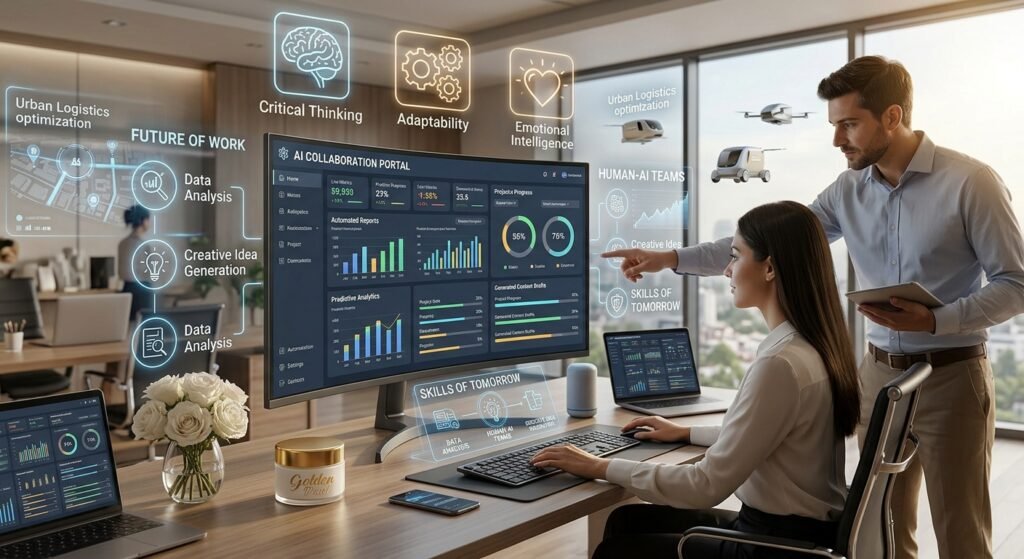
AI integration goes far beyond simple task automation. It is changing workplace productivity, decision-making, and creativity across various domains.
A. Automation of Repetitive Tasks
One of the most immediate impacts of AI is the automation of routine and repetitive administrative tasks. Activities such as data entry, scheduling meetings, filtering emails, and generating basic financial reports can now be performed instantly by AI workflows, freeing up human workers to focus on strategic and creative tasks.
B. Enhanced Data-Driven Decision Making
Modern enterprises generate massive amounts of data daily. AI algorithms can process, analyze, and identify trends within complex datasets far faster than humanly possible. This allows business leaders to make accurate, data-backed decisions in real time.
C. Boosting Human Creativity and Productivity
Generative AI tools (like text generators, code assistants, and image creation platforms) act as virtual co-pilots for creators, software developers, and marketers. Rather than replacing human creativity, these tools assist in brainstorming ideas, drafting outlines, and speeding up execution timelines.
2. Industries Being Reshaped by AI
Almost every global sector is experiencing an AI-driven transformation. Here are a few key industries leading the shift:
- Healthcare: AI models analyze medical imagery to detect diseases early, assist doctors in diagnostics, and accelerate pharmaceutical drug discovery.
- Finance: Financial institutions rely on machine learning for real-time fraud detection, automated risk assessment, and algorithmic trading.
- Marketing & E-Commerce: E-commerce platforms use recommendation engines to offer personalized product suggestions, while AI tools optimize digital advertising campaigns.
- Software Development: AI coding assistants help programmers debug code, write repetitive functions, and build digital applications significantly faster.
3. Will AI Replace Human Jobs?
The debate surrounding AI often centers on the fear of job displacement. While it is true that certain traditional roles centered on routine manual work may decline, history shows that technological revolutions usually transform jobs rather than simply eliminating them.
Roles Most Likely to Evolve:
- Data entry clerk and basic administrative assistants
- Traditional telemarketing and basic customer support
- Manual inventory tracking and routine accounting tasks
High-Demand Emerging Roles:
- AI Prompt Engineers & Machine Learning Specialists: Professionals who design, train, and guide AI models.
- Data Ethics & Compliance Officers: Experts who ensure AI algorithms are used responsibly, transparently, and without bias.
- Cybersecurity Experts: Specialists needed to safeguard complex AI systems and secure cloud networks from cyber threats.
- Human-AI Collaboration Managers: Leaders who coordinate workflows between automated AI systems and human teams.
4. Key Human Skills That AI Cannot Replace
While AI excels at computing data, recognizing patterns, and executing structured instructions, it lacks core human emotional and intellectual capabilities. To thrive in an AI-powered economy, professionals should focus on building the following skills:
- Emotional Intelligence (EQ): Empathy, active listening, and relationship-building remain uniquely human strengths essential for leadership and team management.
- Critical Thinking & Problem-Solving: Evaluating complex situations, questioning assumptions, and making ethical choices require human judgment.
- Adaptability and Continuous Learning: The ability to learn new software, adapt to changing workflows, and unlearn outdated methods will be a lifelong requirement.
- Original Creativity: While AI can generate patterns based on existing data, true original storytelling, artistic vision, and innovative thinking stem from human experience.
5. Practical Steps to Future-Proof Your Career
If you want to maintain a competitive edge in your professional life, consider incorporating these practices:
- Learn AI Tool Basics: Familiarize yourself with popular productivity, content, or analytical AI platforms relevant to your field.
- Focus on Upskilling: Take online certification courses in data analysis, digital marketing, project management, or cloud computing.
- Adopt a Growth Mindset: View AI as a powerful collaborator rather than a competitor. Use it to automate tedious parts of your job so you can deliver higher-level value.
6. Final Thoughts
The integration of Artificial Intelligence into the global workforce is inevitable, but it does not signal the end of human talent. Instead, it marks a shift toward a new era where human ingenuity combined with machine efficiency can achieve unprecedented productivity.
By embracing technological tools, developing irreplaceable soft skills, and remaining adaptable, you can position yourself to thrive in the future of work.